
Showing posts with label Colorful backgrounds. Show all posts

Sunday, March 1, 2009

Gothic Backgrounds

Gothic backgrounds 1
Gothic Backgrounds

Gothic architecture is a style of architecture which flourished during the high and late medieval period. It evolved from Romanesque architecture and was succeeded by Renaissance architecture.

Originating in 12th-century France and lasting into the 16th century, Gothic architecture was known during the period as "the French Style" (Opus Francigenum), with the term Gothic first appearing during the latter part of the Renaissance as a stylistic insult. Its characteristic features include the pointed arch, the ribbed vault and the flying buttress.
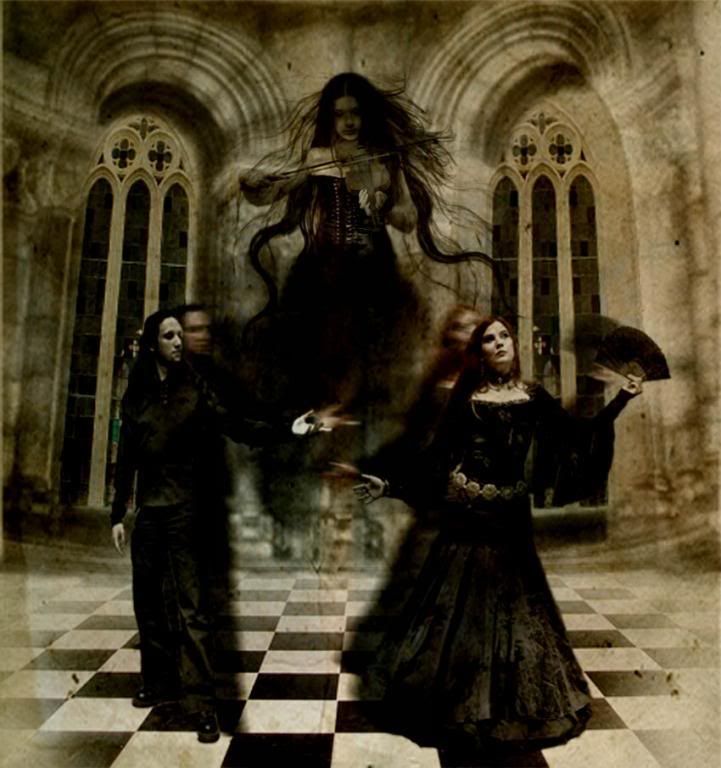
Gothic backgrounds 2

Gothic architecture is most familiar as the architecture of many of the great cathedrals, abbeys and parish churches of Europe. It is also the architecture of many castles, palaces, town halls, guild halls, universities, and to a less prominent extent, private dwellings.

It is in the great churches and cathedrals and in a number of civic buildings that the Gothic style was expressed most powerfully, its characteristics lending themselves to appeal to the emotions. A great number of ecclesiastical buildings remain from this period, of which even the smallest are often structures of architectural distinction while many of the larger churches are considered priceless works of art and are listed with UNESCO as World Heritage Sites. For this reason a study of Gothic architecture is largely a study of cathedrals and churches.

A series of Gothic revivals began in mid-18th century England, spread through 19th-century Europe and continued, largely for ecclesiastical and university structures, into the 20th century.

Gothic backgrounds 3

Gothic backgrounds 4

Gothic backgrounds 6
Gothic Backgrounds

Sunday, October 26, 2008

Gothic backgrounds

Gothic backgrounds

Gothic architecture is a style of architecture which flourished during the high and late medieval period. It evolved from Romanesque architecture and was succeeded by Renaissance architecture.

Originating in 12th-century France and lasting into the 16th century, Gothic architecture was known during the period as "the French Style" (Opus Francigenum), with the term Gothic first appearing during the latter part of the Renaissance as a stylistic insult. Its characteristic features include the pointed arch, the ribbed vault and the flying buttress.


Gothic backgrounds


Gothic architecture is most familiar as the architecture of many of the great cathedrals, abbeys and parish churches of Europe. It is also the architecture of many castles, palaces, town halls, guild halls, universities, and to a less prominent extent, private dwellings.

It is in the great churches and cathedrals and in a number of civic buildings that the Gothic style was expressed most powerfully, its characteristics lending themselves to appeal to the emotions. A great number of ecclesiastical buildings remain from this period, of which even the smallest are often structures of architectural distinction while many of the larger churches are considered priceless works of art and are listed with UNESCO as World Heritage Sites. For this reason a study of Gothic architecture is largely a study of cathedrals and churches.

A series of Gothic revivals began in mid-18th century England, spread through 19th-century Europe and continued, largely for ecclesiastical and university structures, into the 20th century.


Gothic backgrounds

Gothic backgrounds

Tuesday, October 14, 2008

Borders backgrounds

Borders backgrounds

Borders define geographic boundaries of political entities or legal jurisdictions, such as governments, states or subnational administrative divisions. They may foster the setting up of buffer zones. Some borders are fully or partially controlled, and may be crossed legally only at designated crossing points.

There has been a renaissance in the study of borders during the past two decades, partially resulting from the creation of a counter narrative to notions of a borderless world which have been advanced as part of globalization theory. This is reflected in a large number of international workshops and conferences, the BRIT (Border Regions in Transition) network of scholars IBRU (the International Boundaries Research Unit) at the University of Durham, UK, the Association of Borderland Scholars (ABS) in the USA[3], and the founding of smaller border research centres at Nijmegen (Holland), Queens University (Belfast), to name but a few. The Journal of Borderland Studies deals exclusively with border related material, while other international journals such as, Geopolitics, and Political Geography, publish material dealing with the changing significances and functions of borders in the contemporary world.

Borders backgrounds
Borders backgrounds

Borders backgrounds

Borders backgrounds

Borders backgrounds

Borders backgrounds

Borders backgrounds

Borders backgrounds

Christmas background

Christmas background
Christmas (IPA: /krɪsməs/), also referred to as Christmas Day or Christmastide, is an annual holiday celebrated on December that marks and honors the birth of Jesus of Nazareth. His birth, which is the basis for the Anno Domini system of dating, has been determined by modern historians as having occurred between 7 and 2 BC, and is said to have taken place in a stable within the city of Bethlehem. The date of celebration is not thought to be Jesus' actual date of birth, and may have been chosen to coincide with ancient Roman solar festivals that were held on December 25.


Modern customs of the holiday include gift-giving, church celebrations, and the display of various decorations—including the Christmas tree, lights, mistletoe, nativity scenes and holly. Santa Claus, also referred to as Father Christmas, is a popular mythological figure often associated with bringing gifts at Christmas. Santa is generally believed to be the result of a syncretization between St. Nicholas of Myra and elements from pagan Nordic and Christian mythology, and his modern appearance is believed to have originated in 19th century media.


Christmas background


Christmas is celebrated throughout the Christian population, but is also celebrated by many non-Christians as a secular, cultural festival. The holiday is widely celebrated around the world, including in the United States, where it is celebrated by 96% of the population.


Christmas background

Christmas background

Christmas background

Christmas background

Christmas background

Christmas background